
Instant Pot Tonkotsu Ramen with Chashu Pork
As much as I love ramen, I have always been intimidated by making it at home; all this was before I got an Instant Pot. Now, whenever a craving hits, I make Instant Pot Tonkotsu Ramen with chashu pork; instead of days, it just takes some prep time and only a few hours of pressure cooking.

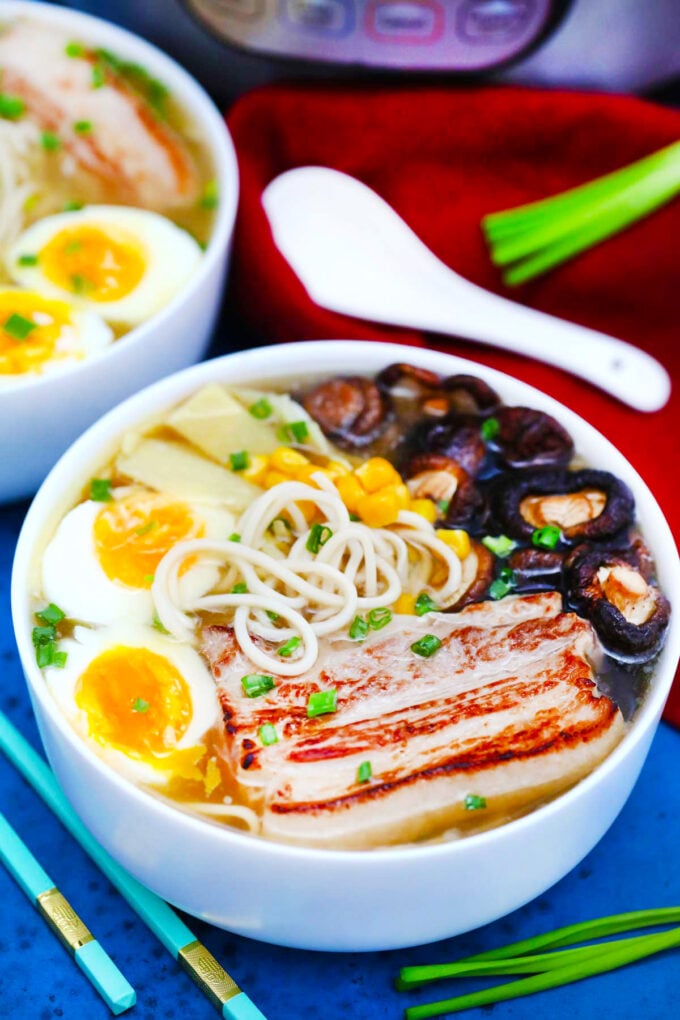
After having Chicken Katsu with Tonkatsu Sauce one night for dinner and Korean Fried Chicken on another, I was craving something comforting and satisfying, a good ramen, and I instantly remembered how easy it is to make it in the Instant Pot. Served with chashu pork, ramen noodles, soft-boiled eggs, miso tare, and mushrooms, it transports me to Japan from the first slurp.
Table of contents
Instant Pot Tonkotsu Ramen broth comes from boiling pork bones to extract flavor. This method usually takes up to two days, but the Instant Pot cuts it to a fraction of the time. This recipe also makes chashu pork belly from scratch. Delicate and tender, melt-in-your-mouth pieces of savory meat add heartiness, texture, and flavor. The miso tare ties everything together; it’s a secret ingredient that elevates the dish by brightening and balancing the rich flavors.
Why you will love this recipe
- Way better than those packaged ramens: Once you taste this ramen soup, you’ll wonder why you ever ate those cheap packages of ramen from the grocery store. Sure, it takes a little more effort, but it is a whole new level of deliciousness.
- Speed it up with an Instant Pot: Making Tonkotsu ramen with chashu pork in the Instant Pot shortens the time from 2 days to just a few hours. Actually, I usually cure the pork bones and sous vide the pork bellies the day before and then make the soup the next day in just 90 minutes.
- Infuses the meat with flavor: Pressure cooking the pork bones pulls flavor from the collagen, so you get all that flavor without boiling them for hours.
- The flavors complement each other: The rich, sweet, and savory flavors of the miso tare, sake sauce, and chashu pork belly blend into a heavenly combination. And the different textures of soft noodles, chewy pork, crisp bamboo shoots, and crunchy corn give your teeth something to enjoy with each bite.
What you will need

For the broth
- Meat: I use 3 lbs. of pork bones with meat on them for a rich pork flavor.
- Produce: A halved onion adds natural sweetness and savory depth. Garlic cloves cut through the pork’s heavy fat, dissolving like chopped garlic would.
- Seasonings: Peeled ginger root helps cut bitterness and adds a clean, sharp spice.
For the ramen
- Produce: Bamboo shoots provide a crunchy, chewy texture with a slightly sweet taste. Shiitake mushrooms add a deep, savory flavor with an earthy hint. Thinly sliced green onions add a sharp, refreshing bite that cuts through the heavy soup. Corn adds a natural sweetness and pops of vibrant color.
- Wet ingredients: Pork broth is the main ingredient in this ramen. The pork bones are soaked for hours, then boiled for 10 minutes and pressure-cooked for 90 minutes to draw out the most incredible flavor from the meat, vegetables, and seasonings. The egg yolks melt into the pork broth, adding rich flavor and a velvety mouthfeel.
- Dry ingredients: I use dry, thin alkaline ramen noodles from Sun Noodle because they hold up best in this soup.
For the pork belly
- Meat: I use 2 lbs. of pork belly, rolled and tied tightly so it holds its shape.
- Produce: Minced garlic releases its flavor quickly and cuts through the pork belly’s heavy fat, letting the garlic shine through. Coarsely chopped green onions add a bold flavor and stay intact so they don’t get stuck in the filling.
- Wet ingredients: Sesame oil adds a nutty aroma and deep savory depth to the meat—low-sodium soy sauce cuts through the fat, adding just enough saltiness and umami. Sake helps tenderize the meat and removes any hint of gaminess. Mirin adds sweetness and a nice glaze.
- Seasonings: White sugar balances the saltiness of the soy sauce and the richness of the fat while adding clean sweetness. Brown sugar provides a caramelized, sticky coating with a deep molasses taste.
For the miso tare
- Wet ingredients: Sake adds depth and tanginess to miso tare with a fruity aroma. I also add mirin for a slightly more savory flavor and a bit of saltiness. The sweet, mild taste of miso tare balances the rich, heavy fat of the pork belly without overpowering it.
- Seasonings: I also add kosher salt to taste.
How to prepare
Chill the pork: First, I put the pork bones in a large pot, cover with cold water, and chill in the fridge for 12 hours.
Boil the bones: The next day, I boil 3 cups of water over medium-high heat. Then, I put the bones in the Instant Pot on Sauté with the boiling water and let them simmer for 10 minutes before shutting it off.
Remove the fat: I drain the water and put the bones in a bowl of cold water to remove the fat.

Cook the ramen: After cleaning the Instant Pot, I add the onion, garlic, and ginger, then add the bones back and fill the pot to the ¾ fill line. I secure the lid and cook for 90 minutes, then let it release pressure for 10 minutes.
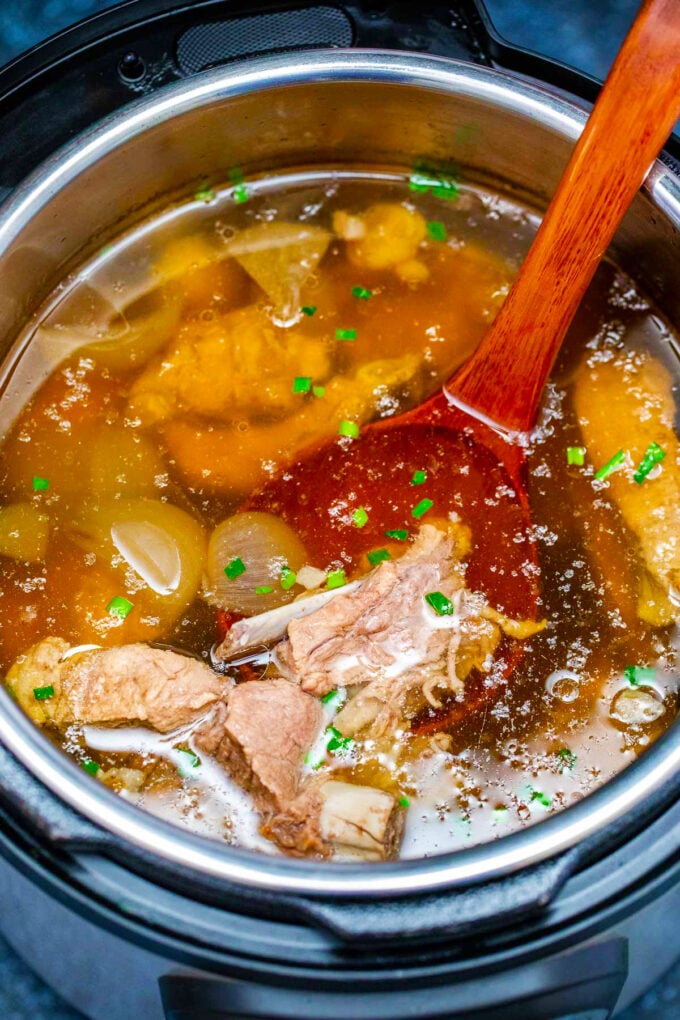
Prepare the pork belly: The day before, I combine the pork belly, sesame oil, sake, mirin, soy sauce, garlic, onion, brown sugar, and granulated sugar in a large zipper baggie. I seal the bag and sous vide the pork for 10 to 11 hours at 170°F. Then, I remove the meat from the bag and discard the marinade. Afterward, I let the pork cool completely, then slice it into 1/8-inch pieces.
Make the miso tare: I combine all the ingredients in a small saucepan and simmer on low for about 5 minutes, stirring occasionally.
Boil the eggs: I place the eggs in a small saucepan over medium heat, with enough water to cover them. After the water boils, I let them boil for 6 minutes and 30 seconds for medium-boiled eggs. Afterward, I submerge them in ice water, peel them, set them aside, and cut them in half before adding them to the ramen.
Boil the ramen: Now, I boil the ramen according to the package instructions, cooking the mushrooms alongside just enough to soften them.
Brown the pork: Then, I use a little oil in a frying pan to lightly brown the pork slices on each side.
Assemble the soup: Next, I add ¼ of the miso tare to the bottom of 4 soup bowls, ladle in 1 cup of broth, and stir to combine. Then, I spoon in noodles and another cup of broth, then top with the egg, mushrooms, pork slices, corn, bamboo shoots, and green onions.
Garnish and serve: Finally, I serve the ramen with fresh green onions on top.

Expert tip
Getting the right kind of ramen noodles
Most importantly – do not get the instant ramen noodles in the package. Those are not real ramen noodles. For this recipe, I recommend dry, straight, firm alkaline wheat noodles. Hakata-style thin ramen noodles will hold up without getting too soggy. Sun Noodle makes a good ramen noodle and is the main supplier for most restaurants and grocery stores in the United States.
More tips to consider:
- Use pork bones with a lot of fat and collagen for the best flavor.
- Don’t skip tying the Don’tbelly so it stays together.
- Use a straw to suck as much air as possible from the baggie for a better sous vide seal. This works whenever you package food in baggies.
- Peeling eggs works in cold water. Also, add a teaspoon of vinegar to the boiling water.
- Rinse the bones first to remove old blood and impurities.

Recipe variations and add-ins:
- Spicy tonkotsu ramen: Add some jalapeño peppers and red pepper flakes for spicy food lovers.
- Different meat: If pork is not available, use beef, turkey, or chicken instead. The flavor will be different but delicious in a different way.
- Other spices: To change the taste, add other herbs and spices such as basil, oregano, rosemary, thyme, cilantro, fennel, dill, or paprika.
- More vegetables: I sometimes add more vegetables like chopped carrots, broccoli and cauliflower florets, pea pods, and green beans.
- Different marinade: Use a different flavor for your pork belly, like teriyaki, barbecue, or honey garlic.

Serving suggestions:
This soup goes wonderfully with my crispy Panda Express chicken egg rolls. They actually taste better and are healthier than the ones from the restaurant because I use fresh ingredients with no added preservatives or hidden ingredients like MSG! The kids also like it when I serve steamed dumplings or potstickers on the side. I usually fill them with vegetables to balance the rich pork.
These spicy chicken wings are the perfect finger food to go with this soup. They are tangy, sweet, and a little bit hot, made with gochujang sauce and freshly minced ginger. Or try this crispy orange chicken for those who don’t like spicy food, as it has a tangy, sweet orange sauce and a crunchy texture. For something lighter, I serve this spicy cucumber salad, which has a nice kick and refreshing crunch.
Best toppings for Tonkotsu Ramen:
Here are more suggestions aside from the egg, mushrooms, chashu, and green onions:
- bamboo shoots
- cabbage
- diced onions
- nori sheets
- pickled ginger
- pickled mustard
- bean sprouts
- boiled spinach
- sesame seeds
How to store leftovers:
- Refrigerate: Store the broth in an airtight container for up to 3 days in the fridge
- Freezing: I freeze the broth in freezer bags for up to 3 months. Leftover pork belly can be frozen for up to 3 months, wrapped in plastic and placed in freezer bags.
- Defrost: Thaw leftovers in the fridge overnight before reheating.
- Reheating: I reheat leftovers in a saucepan over medium heat.

Frequently asked questions
It could be from spoiled or unwashed bones. If you don’t clean the pork bones properly before boiling, impurities and old blood can cause a sour flavor. Bacteria and old bone marrow can also taint the broth’s flavor, even if you boil the bones. Be sure to get your bones from a reputable butcher or farmers’ market. I prefer pork bones from a farmers’ market.
Get the most nutrient-rich bones with the most marrow, such as neck bones, pork trotters (feet), hocks, or backbones. Neck bones are the favorite choice because they have the highest meat-to-bone ratio with rich cartilage. They have plenty of gelatin for a thick, luxurious broth. Hocks and backbones are also great choices because they have plenty of collagen, which gives the broth a milky, smooth texture and rich flavor.
Although pork belly is the traditional cut for this dish (chashu pork), you can also use another fatty cut, such as bacon, pork shoulder, or jowl. In fact, bacon is the same cut of pork, except it is cured and smoked, so it is basically the same thing. Choose thick-cut bacon and roll it. The pork jowl is similar to bacon and is often called jowl bacon. It is a fatty piece of meat from the pig’s cheek. Pork shoulder ispig’sher good choice because it has a lot of connective tissue and fat.
This can happen if you boil the Shiro miso paste during cooking. Boiling the miso destroys the fermented agents, which flattens the flavor and makes it taste slightly bitter. It can also happen if you overcook the sake and mirin. Overcooking these two ingredients can make them taste burnt and produce a bitter flavor.
More Instant Pot recipes:




Loved this recipe? I’d love to hear from you! 💛 Leave a 5-star rating ⭐️ in the recipe card below and share your thoughts in the comments – I read and appreciate every single one!
Let’s stay connected! Follow me on Facebook, Instagram, Pinterest, and YouTube for more delicious, sweet and savory recipes. Have a question? Ask in the comments, and I’ll be happy to help! 😊 with love Catalina!
Instant Pot Tonkotsu Ramen
Ingredients
Tonkotsu Ramen Broth:
- 3 lbs pork bones with some meat on them – I used rib bones
- 1 onion peeled and halved
- 4 cloves garlic
- 1 inch ginger root peeled
Tonkotsu Ramen:
- 8 cups Tonkotsu pork broth from recipe above
- 12 oz dried ramen noodles high quality
- 4 large eggs
- 3 oz dried shiitake mushrooms hydrated
- 1/2 cup bamboo shoots
- 1/2 cup sweet corn
- 1/2 cup green onions thinly sliced
Chashu Pork Belly:
- 2 lb pork belly rolled and tied
- 1/4 cup soy sauce
- 1/2 cup sake
- 1/2 cup mirin
- 2 tablespoons white sugar
- 2 tablespoons brown sugar
- 4 cloves garlic minced
- 2 green onions coarsely chopped
- 1 tablespoon sesame oil
Miso Tare
- 1/2 cup shiro miso
- 1/4 cup sake
- 1/4 cup mirin
- 1 1/2 teaspoons kosher salt
Instructions
Tonkotsu Ramen Broth:
- Place the pork bones in a large stockpot, cover with cold water, and chill for 12 hours.
- Place a large saucepan over medium-high heat and add 3 cups of water to a boil.
- Meanwhile, transfer the pork bones to the Instant Pot, select Sauté on High, and add boiling water to the IP. Simmer the bones for 10 minutes.
- Press cancel. Carefully drain the water, transfer the bones to a large bowl of cold water, and remove any fat. Rinse the inner pot.
- Add the onion, garlic, and ginger, then return the bones to the Instant Pot. Fill the pot with water to the 3⁄4 fill line.
- Secure the lid, point the valve to sealed, and cook on manual high pressure for 90 minutes, then allow the pressure to naturally release
- Remove the lid and serve the broth as is or with toppings.
Chashu Pork Belly:
- Combine the pork with the soy, sake, mirin, sugars, garlic, sesame oil, and green onions in a large Ziploc bag.
- Insert a straw into the bag and seal the Ziploc bag around it, removing as much air as possible; this way, the straw serves as the only opening for air.
- Sous vide the pork for 10-11 hours at 170F.
- Remove pork from the Ziploc bag and discard the marinade.
- Let the chashu pork belly cool completely before slicing into 1/8-inch-thick slices. Set aside.
Miso Tare:
- Combine all ingredients in a small saucepan and simmer on low heat for about 5 minutes.
Medium Boiled Eggs:
- Place the eggs in a small saucepan over medium heat and add enough water to cover them. Bring to a boil. Boil the large eggs for 6 minutes and 30 seconds.
- Submerge the eggs in cold water to chill. Peel and set aside.
- Cut in half before adding to the ramen.
Assemble the Tonkotsu Ramen:
- Boil the ramen noodles according to the package instructions.
- Cook the mushrooms with the noodles by adding them to hot water until softened. Drain them once they are soft; you just want them softened.
- Place a non-stick skillet over medium heat, add a little oil, and gently fry the pork slices until lightly browned on both sides.
- Add 1/4 of the miso tare to the bottom of each of the four soup bowls.
- Ladle about 1/2 cup to 1 cup of the tonkotsu broth into each bowl and stir to combine.
- Add some noodles and another 1 1/2 cups of the tonkatsu broth per bowl.
- Top with the medium soft-boiled egg, mushrooms, sweet corn, bamboo shoots, chashu pork slices, and chopped green onions.
Video
Notes
Getting the right kind of ramen noodles
Most importantly – do not get the instant ramen noodles in the package. Those are not real ramen noodles. For this recipe, I recommend dry, straight, firm alkaline wheat noodles. Hakata-style thin ramen noodles will hold up without getting too soggy. Sun Noodle makes a good ramen noodle and is the main supplier for most restaurants and grocery stores in the United States.More tips to consider:
- Use pork bones with a lot of fat and collagen for the best flavor.
- Don’t skip tying the Don’tbelly so it stays together.
- Use a straw to suck as much air as possible from the baggie for a better sous vide seal. This works whenever you package food in baggies.
- Peeling eggs works in cold water. Also, add a teaspoon of vinegar to the boiling water.
- Rinse the bones first to remove old blood and impurities.
This looks so delicious. My family loves ramen so I bet they will like this.
I have never tried this Asian dish. It looks really unique and fresh.
Holy wow! That looks absolutely amazing! I love real, honest to goodness ramen. I’ve never tried making my own before.
This looks so amazing! I love ramen but haven’t made it in the instant pot. I’ll have to try this!
I am part Japanese and grew up on both Tonkatsu and Ramen. Combining them is genius!
I am loving the flavors of this dish. I haven’t tried Japanese food before. I’m looking forward to it.
I really love how flavorful this looks!
My family especially my eldest daughter absolutely loves ramen. This would be a great recipe to make for dinner, I’m sure they’ll love it.
This was unbelievable. I used cooking wine instead of sake just out of pure laziness. I’ve been to at least 50 ramen spots. Most of them delicious. This recipe is the best ramen I have ever tasted. Thanks for sharing!
Thank you!
Hi! is there an alternative to preparing the chashu? I do not have a sous vide.
You can simply steam it and after that light brown it.