
Soba Noodles – Ready in 20 Minutes!
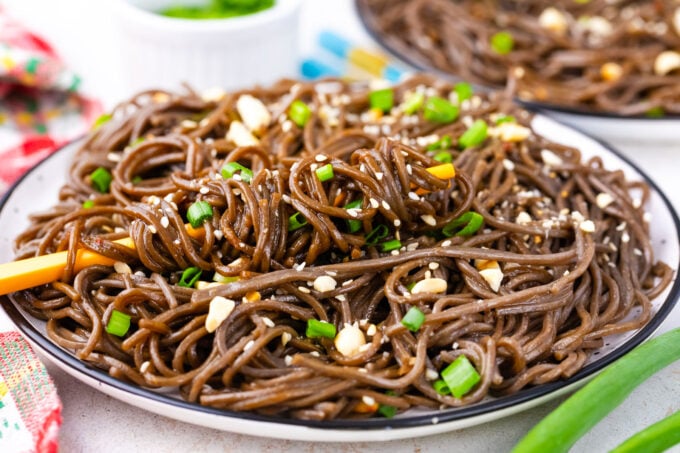
When I am short on time but still want to cook something special for my family, I make Soba Noodles in a sweet-and-savory sauce. With flavors from robust, rich garlic, peppery ginger, and brown sugar sauce, this easy meal takes just 20 minutes to make and pairs well with so many mains.
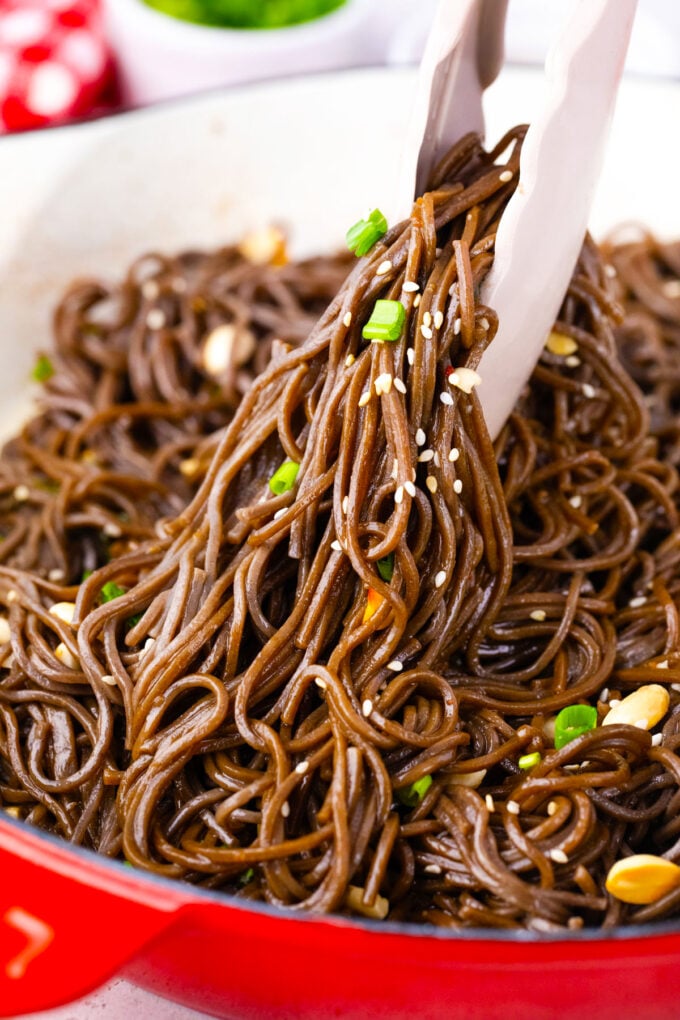
You can easily pair this effortless side dish with Slow Cooker Sesame Chicken or these one-pan General Tso Pork Chops. The aromatic sauce makes a huge difference in turning simple buckwheat noodles into something you would get at a Japanese restaurant.
Table of contents
Meals like these save the day when I have minimal time to cook. I also like that recipes like these are frugal, yet delicious. My kids love it when I make soba noodles, and always ask for this peanut sauce as well. It’s so good drizzled on top. I will give you one more tip: if you have some veggies that need to be used, chop them, saute them, and only after that add the sauce and the noodles, you have a homemade stir fry ready in minutes.
Why you will love this recipe
- A versatile meal in minutes: I can make this easy meal in just a few minutes. It goes with anything, and the best part is that it can be customized by adding veggies, meat, or seafood.
- Just a few ingredients: noodles, some basic sauces, and seasonings. I won’t have to go shopping because I usually have all these items in my pantry already.
- Inexpensive Asian dish: When I want to make an inexpensive Japanese meal, this is the perfect recipe to start with. It costs less than $5 to make this, and I can turn it into a full meal with just a few dollars more.
- Everyone loves noodles: Young and old, everyone seems to love noodles, whether they are hot or cold. No matter how I serve them, the kids will eat them with their fingers or chopsticks.
What you will need
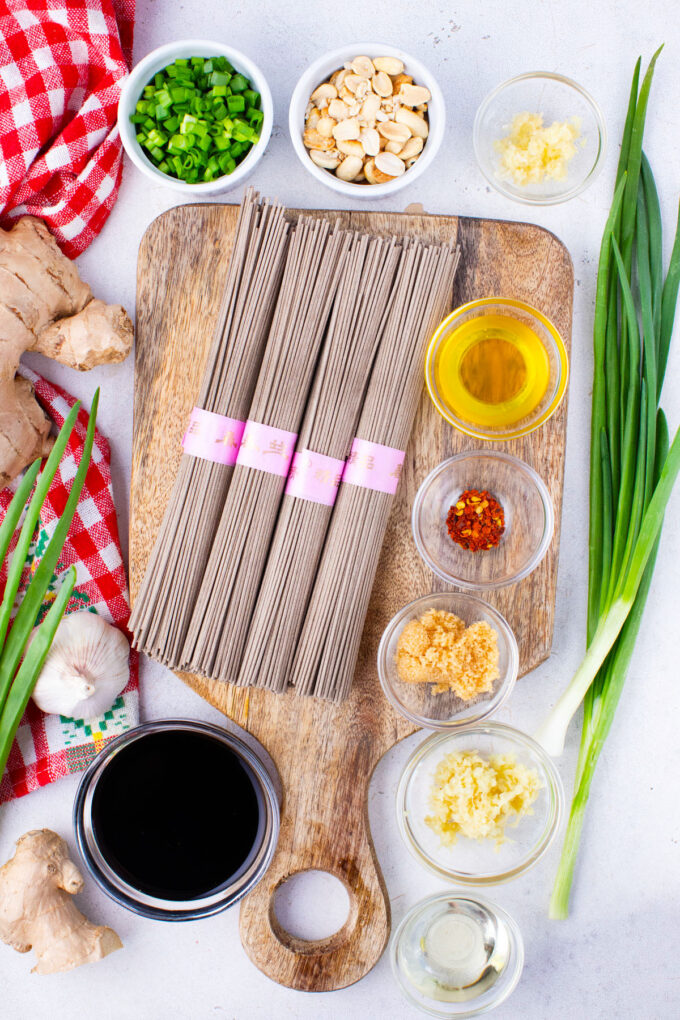
- Wet ingredients: The soy sauce adds an umami base to build on. I use low-sodium sauce to keep it from overpowering everything with salt. For a nutty richness to complement the earthy buckwheat, sesame oil is the perfect coating, keeping the pasta from sticking. Rice wine vinegar provides a slightly sweet, acidic note that balances savory flavors like sesame oil and soy sauce. I use canola oil for sautéing because of its high smoke point and mild flavor.
- Dry ingredients: I use 10 ounces of dry soba noodles. I like to use the kind that is mixed with refined wheat flour because it is not so delicate that it falls apart when I cook it.
- Seasonings: Brown sugar adds a richer, more caramelized sweetness than white sugar and helps create a sticky coating on the noodles. Minced garlic infuses the pasta quickly with a robust garlic taste that cuts through the other flavors. Grated ginger adds a pungent and refreshing, slightly spicy contrast to the noodles. A pinch of red pepper flakes introduces a bit of heat and color for a kick. Finally, chopped green onions provide crunch and a burst of color to this delicious pasta dish.
- Garnishes: I also like to top my noodles with sesame seeds and chopped peanuts for extra crunch and nuttiness.
How to prepare
Cook the noodles: First, cook them according to the package instructions, then rinse and set them aside.
Whisk the sauce: In a small bowl, whisk together the soy sauce, rice wine vinegar, sesame oil, brown sugar, garlic, ginger, and red pepper flakes until well combined.
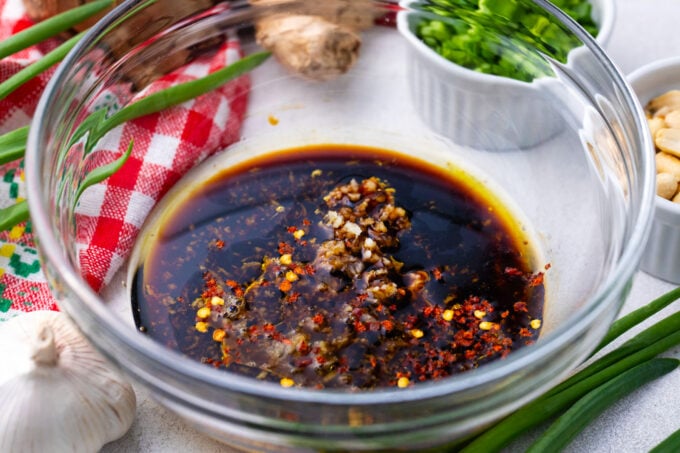
Sauté the ingredients: Next, I preheat a large skillet on medium-high before adding the oil. Once it is shimmering, I add the green onions and let them cook, stirring, for 30 seconds, or until they are just softened. Then, I add the soy sauce mixture and cook for another 30 seconds.
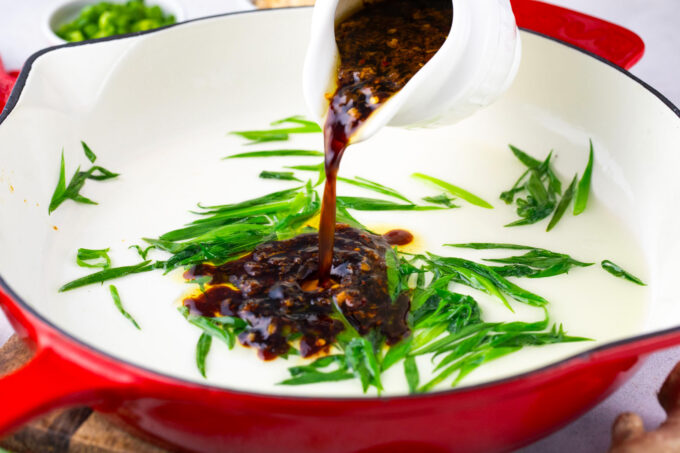
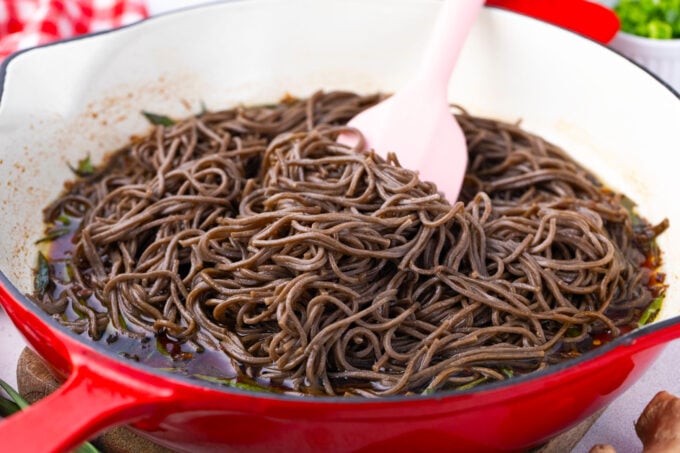
Combine: The noodles go in next, and I toss them until they are heated through.
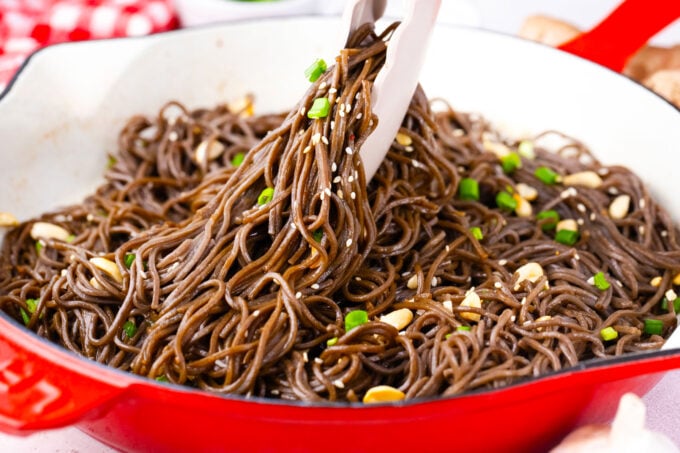
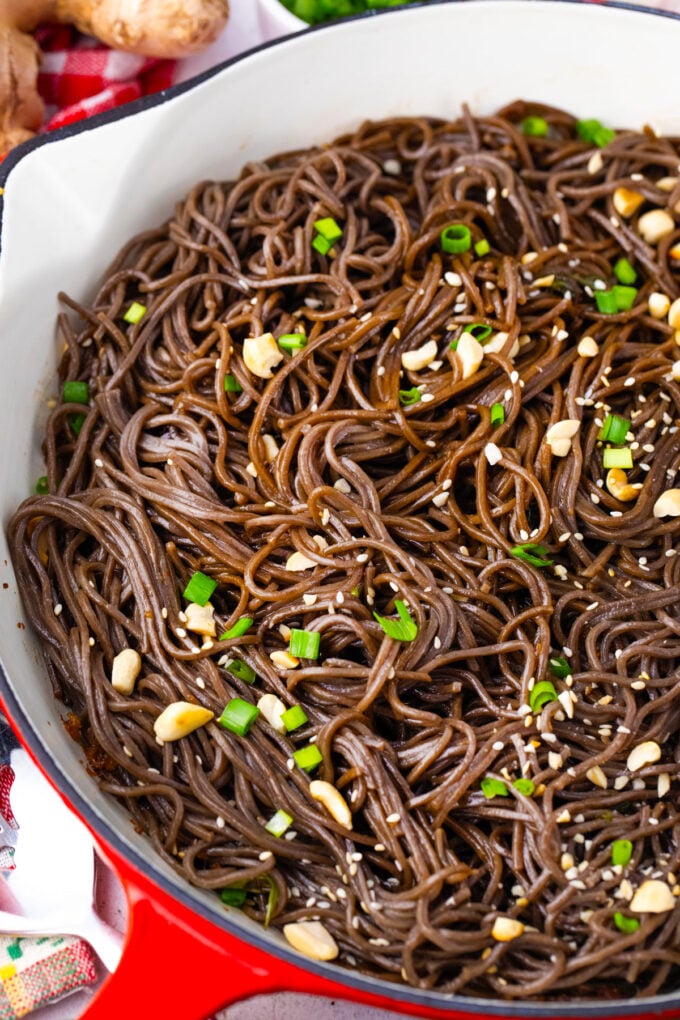
Garnish and serve: Finally, I remove the pan from the heat and garnish with more green onions, chopped peanuts, and sesame seeds before serving.
Expert tip
How to keep soba noodles from being mushy
Because soba noodles are made from buckwheat, they are very delicate, making them fast to cook. The first thing to know is that you should not soak the noodles before cooking them. Always read the instructions first. I prefer to get soba noodles with added wheat flour, so they are not as delicate. However, they will still cook fast, so be careful. Do not salt the cooking water, and only cook the pasta for 3 to 5 minutes. Use plenty of water, then rinse the noodles in cold water, gently rubbing them to remove the starch until the water runs clear.
More tips to consider:
- For gluten-free soba, I use pure buckwheat pasta with no other wheat added.
- Soba is rich in fiber, protein, and nutrients such as thiamin, manganese, and other minerals, which regular white pasta lacks.
- If you’re adding vegetables, be sure to add the hard ones first, before the softer ones, so they cook evenly. For example, broccoli and cauliflower would go first, and peas or spinach would go last.
- Make sure the leftovers are completely cool before sealing them in containers to avoid mushy pasta.
- When reheating, it only takes a few seconds to heat it through.
Recipe variations and add-ins:
- Add meat: If I am trying to make this more like a meal, I add chopped meat like chicken breasts, turkey, ham, or beef. Bacon is another delicious choice.
- More vegetables: I also like to add a lot of vegetables to these noodles to make them heartier. Some of my favorites are broccoli, cauliflower, mushrooms, zucchini, avocados, red onions, bell peppers, and pea pods.
- Other proteins: Some other proteins that work well with these noodles are edamame, tofu, tempeh, fava beans, and scrambled or hard-boiled eggs.
- Spicy soba: I sometimes add more red pepper flakes, chopped jalapenos, or poblano peppers for those who like spicy noodles. These noodles are delicious with a bit of hot sauce or my homemade General Tso sauce.
- Garlic confit: If you are a garlic lover like me, try adding some roasted garlic confit to the noodles for an extra-buttery garlic flavor. This stuff is so delicious, I like to put it on everything!
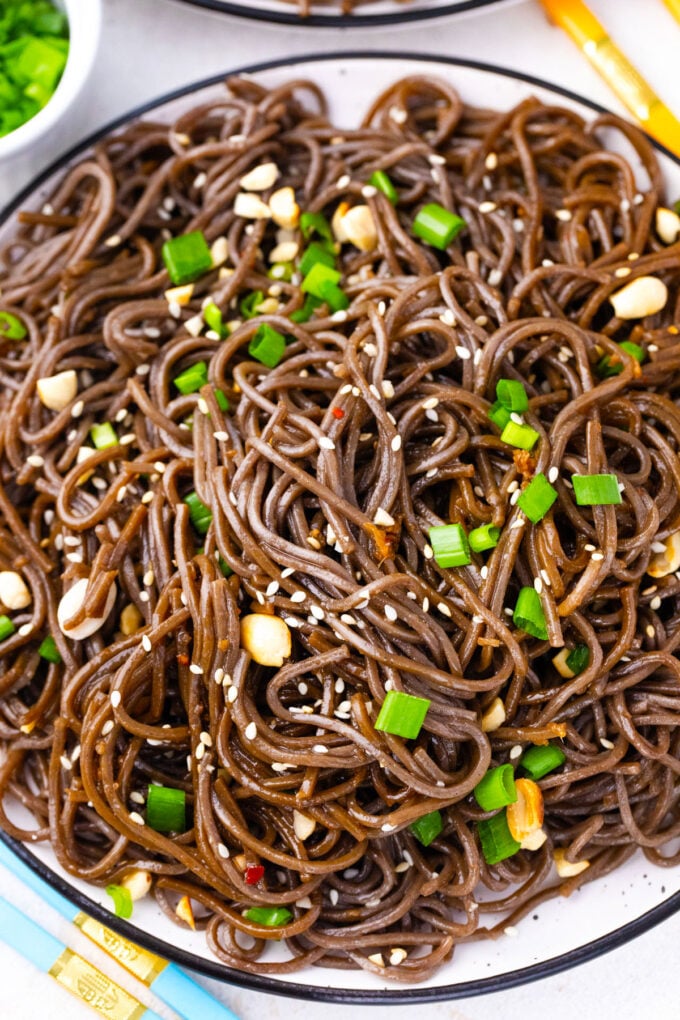
Serving suggestions:
This Japanese pasta pairs well with anything savory, such as chicken, beef, and seafood, as well as spicy, crispy tofu, eggs, and vegetables. I like to douse them in different sauces like soy sauce, sesame oil, or yum yum sauce. Peanut sauce is another way to dress up these noodles. Try my easy recipe for creamy peanut sauce, made in 10 minutes with just a few ingredients.
These noodles can be served hot or cold, with or without dipping sauces. I love it with my delicious chicken katsu. This crispy dish is served with a barbecue sauce that is a heavenly comfort food full of Asian flavors. Or I can just toss the noodles with fresh vegetables and serve them with this easy-to-make Instant Pot rice that comes out fluffy and tender every time. This dish is perfect with some of my homemade teriyaki sauce, which you can make in less than 20 minutes.
How to store leftovers:
- Refrigerate: These noodles will last up to a week in a sealed container in the fridge.
- Freezing: To freeze, I pack these noodles in freezer bags, where they will stay fresh for 3 to 4 months.
- Defrost: I thaw frozen leftovers in the fridge overnight.
- Reheating: Heat them quickly in a pan over medium heat with sesame oil.
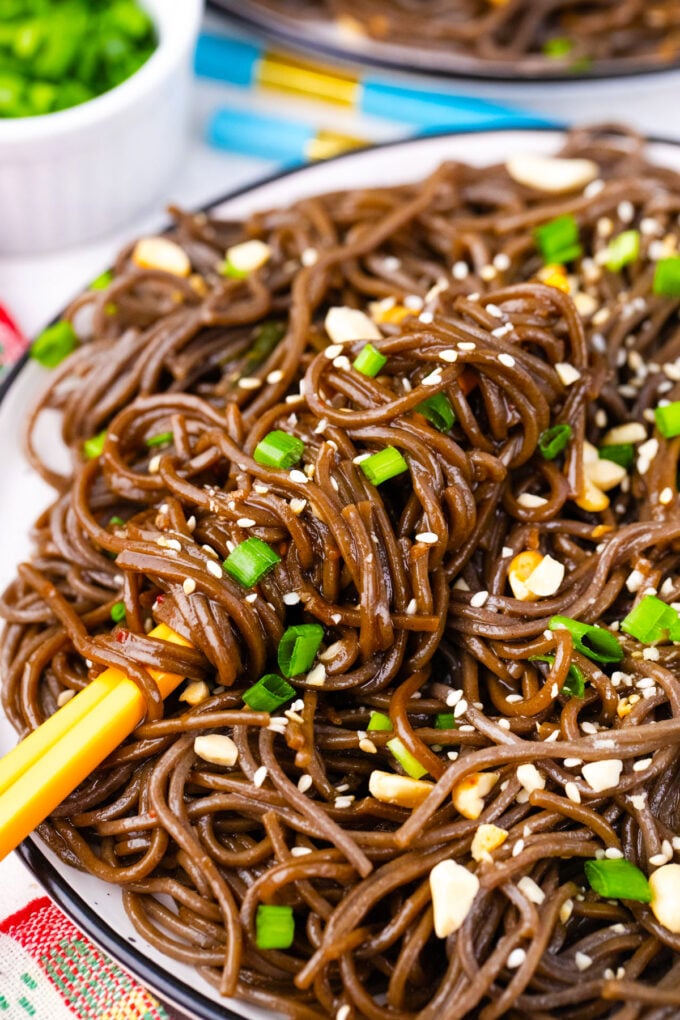
Frequently asked questions
To prevent the noodles from sticking to each other, I do not recommend rinsing or soaking them before cooking. Instead, stir them frequently while they cook. Also, rinse them immediately after they finish cooking in very cold water, rubbing them with your fingers to remove any excess surface starch. It is the starch that causes the noodles to stick. In fact, tossing them in a little sesame oil can help keep them from sticking.
No, do not rinse or soak soba noodles before cooking them. However, they do need to be rinsed right away after they are cooked to remove all the surface starch. I also use my fingers to massage the noodles as I run them through the cold water. This helps get all the starch. Keep tossing the pasta gently until the water runs clear and the noodles feel cool to the touch. This will prevent sticky, slimy, or mushy noodles.
The best soba noodles are found in Japan, specifically in Nagano Prefecture. They call it Togakushi soba. If you can find a reputable online dealer, like Japanese Taste or Eden Organic, you can buy all kinds of Japanese products from noodles to health and beauty products. If you want soba noodles with more chew that won’t fall apart as easily, try soba noodles that are not 100% buckwheat. Eden’s organic soba noodles, made with 62% spring wheat flour, are amazing.
Many people say the directions on the package call for cooking them for too long. I tend to agree. I cook my soba noodles for about 4 minutes. Start out with hot, boiling water and cook them for 4 minutes, stirring frequently to keep them from sticking to each other or the bottom of the pan. Afterward, I run them under cold water in a colander, rubbing them with my fingers to remove the excess starch.
More Asian side-dishes worth a try:


Loved this recipe? I’d love to hear from you! 💛 Leave a 5-star rating ⭐️ in the recipe card below and share your thoughts in the comments – I read and appreciate every single one!
Let’s stay connected! Follow me on Facebook, Instagram, Pinterest, and YouTube for more delicious, sweet and savory recipes. Have a question? Ask in the comments, and I’ll be happy to help! 😊 with love Catalina!
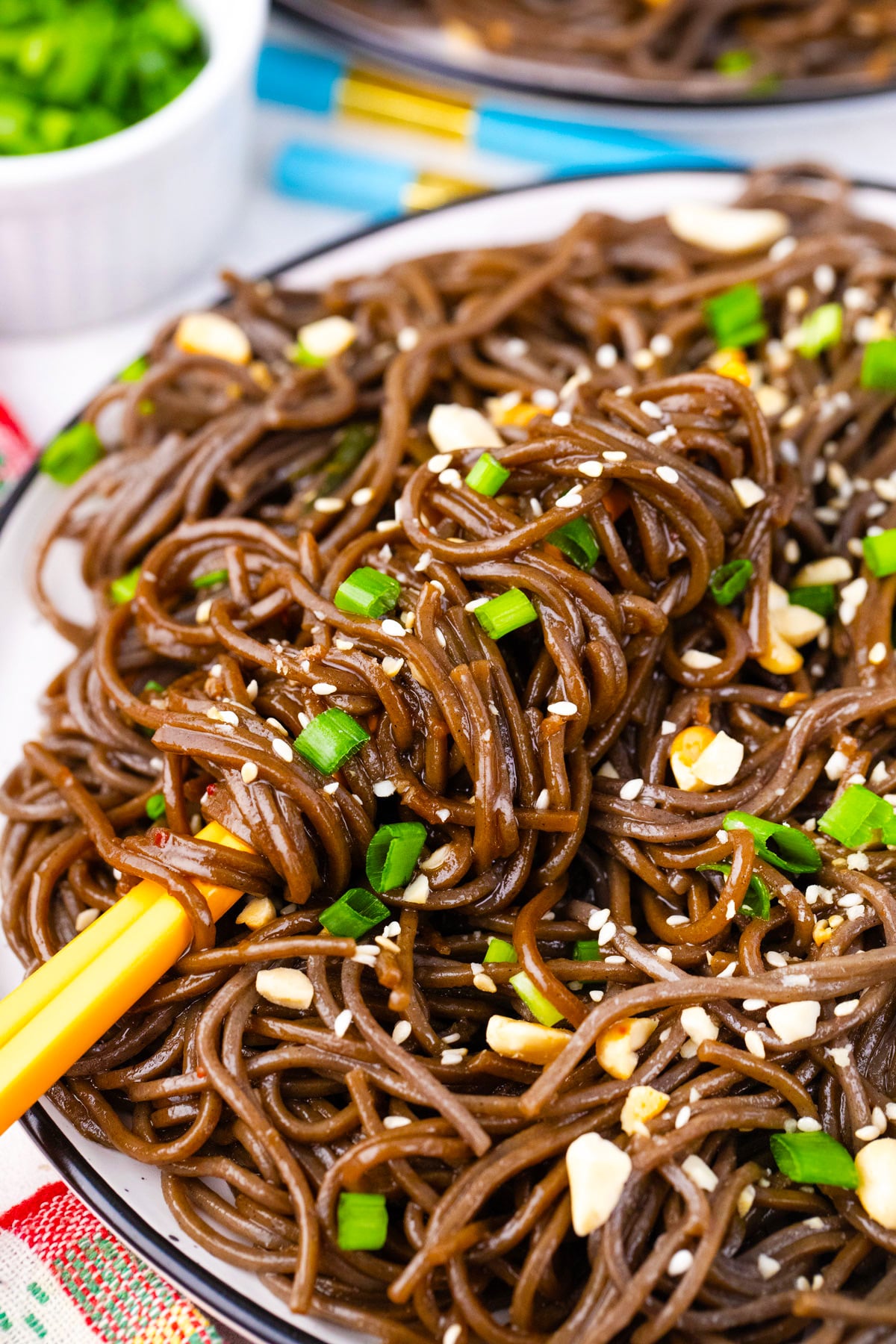
Soba Noodles – 20 Minutes Only!
Ingredients
- 10 ounces soba noodles dry
- 3 tablespoons rice wine vinegar
- 1/3 cup soy sauce low-sodium
- 2 tablespoons sesame oil
- 1 tablespoon brown sugar
- 2 cloves garlic minced
- 1 tablespoon ginger grated
- 1/4 teaspoon red pepper flakes
- 2 tablespoons canola oil or peanut oil
- 1/4 cup green onions thinly sliced
Garnish:
- Green onions
- 1 teaspoon sesame seeds
- Chopped peanuts
Instructions
- In a large pot of boiling water, cook noodles according to package instructions. Rinse under cold water, drain, and set aside.
- In a small bowl, whisk together rice wine vinegar, soy sauce, sesame oil, brown sugar, garlic, red pepper flakes, and ginger.
- Place a large skillet over medium-high heat. Add the canola oil and heat until shimmering. Once hot, add the chopped green onions. Cook, stirring, for about 30 seconds or until just softened.
- Add the soy sauce mixture and cook for 30 seconds.
- Add the noodles and toss until heated through.
- Garnish with the sesame seeds, green onions, and chopped peanuts.
Video

Notes
How to keep soba noodles from being mushy
Because soba noodles are made from buckwheat, they are very delicate, making them fast to cook. The first thing to know is that you should not soak the noodles before cooking them. Always read the instructions first. I prefer to get soba noodles with added wheat flour, so they are not as delicate. However, they will still cook fast, so be careful. Do not salt the cooking water, and only cook the pasta for 3 to 5 minutes. Use plenty of water, then rinse the noodles in cold water, gently rubbing them to remove the starch until the water runs clear.More tips to consider:
- For gluten-free soba, I use pure buckwheat pasta with no other wheat added.
- Soba is rich in fiber, protein, and nutrients such as thiamin, manganese, and other minerals, which regular white pasta lacks.
- If you’re adding vegetables, be sure to add the hard ones first, before the softer ones, so they cook evenly. For example, broccoli and cauliflower would go first, and peas or spinach would go last.
- Make sure the leftovers are completely cool before sealing them in containers to avoid mushy pasta.
- When reheating, it only takes a few seconds to heat it through.
I love quick and easy meals like this- a new go-to for sure!
Your tips are very helpful. I love ordering these noodles when we are out. Now I can have them at home!
What a great alternative to just your ordinary pasta! I love that these are gluten free; perfect for my diet!
I love soba noodles! The possibilities of what to add to them are endless! Yum!
This is something I need to try! Never made anything like it!
This couldn’t look any more perfect! I’m going to have to try this.
Ahh I love soba noodles! It’s been too long since I had them!
You always seem to post my favorite takeout dishes. I love soba noodles. This was the first time I ever made them.
Nice. Love the tips. This was the first time I was ever successful at making soba noodles that were actually good.
These Soba Noodles are quick, flavorful, and ready in 20 minutes. The sweet-and-savory garlic ginger sauce makes them perfect with so many mains.
Such a perfect meal for hot summer nights. This is so easy and so flavorful! Definitely will be on repeat!
Oh wow! That sauce is everything! It made the soba noodles so delicious. I could eat on this for days.